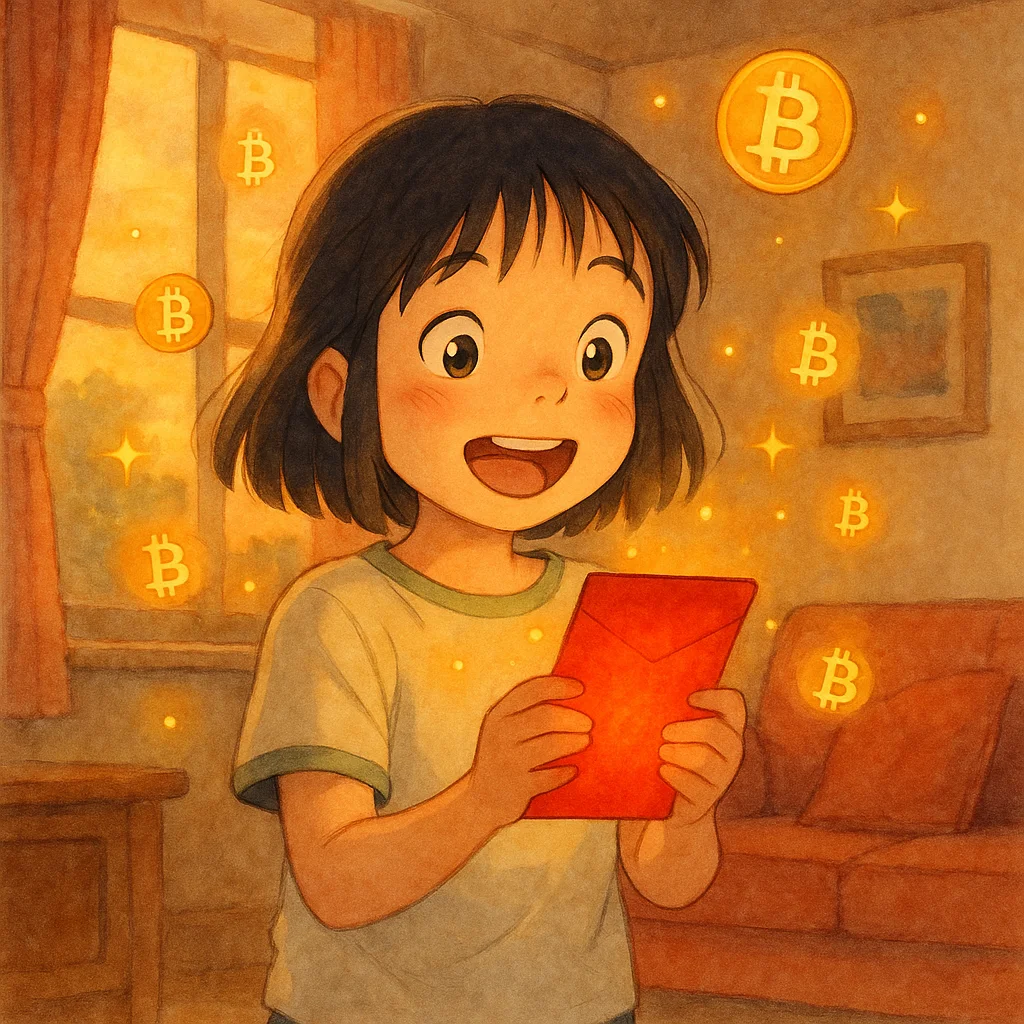
My 8-year-old cousin asked “What’s Bitcoin?” I handed her a paper wallet worth $5. She gets it now.
Schools teach kids about money. Sort of.
They learn that banks hold your money. That credit cards let you buy stuff now and pay later. That saving is good (but here’s a 0.01% interest rate that doesn’t keep up with inflation).
What they don’t learn:
Bitcoin fixes this. But you can’t just explain it. Kids learn by doing.
The best financial education isn’t a lecture. It’s ownership.
Stephane Bounmy
When a kid holds a paper wallet with their own Bitcoin on it, something clicks. It’s theirs. Not the bank’s. Not their parents’. Theirs.
Here’s how Paul Graham explained it to his kids:
How I explained Bitcoin to my kids. A currency needs two things: to be easily transportable, and to be rare. Bitcoin is easily transportable because you can send it from computer to computer, and rare because to make more you have to solve increasingly hard math problems.
— Paul Graham (@paulg) April 19, 2021
Simple. No blockchain lectures. Just: transportable + rare.
Here’s what we tell kids: “Save your money in a piggy bank. Then put it in a savings account. Watch it grow.”
Here’s what actually happens:
| Year | $100 saved | Real value (after 3% inflation) |
|---|---|---|
| 0 | $100 | $100 |
| 5 | $100 | $86 |
| 10 | $100 | $74 |
| 18 | $100 | $59 |
By the time they’re adults, their “savings” buy almost half of what they could have bought originally.
We’re teaching kids to save in a currency designed to lose value.
No wonder Gen Z figured out the game is rigged. Many are already turning to crypto as an alternative.
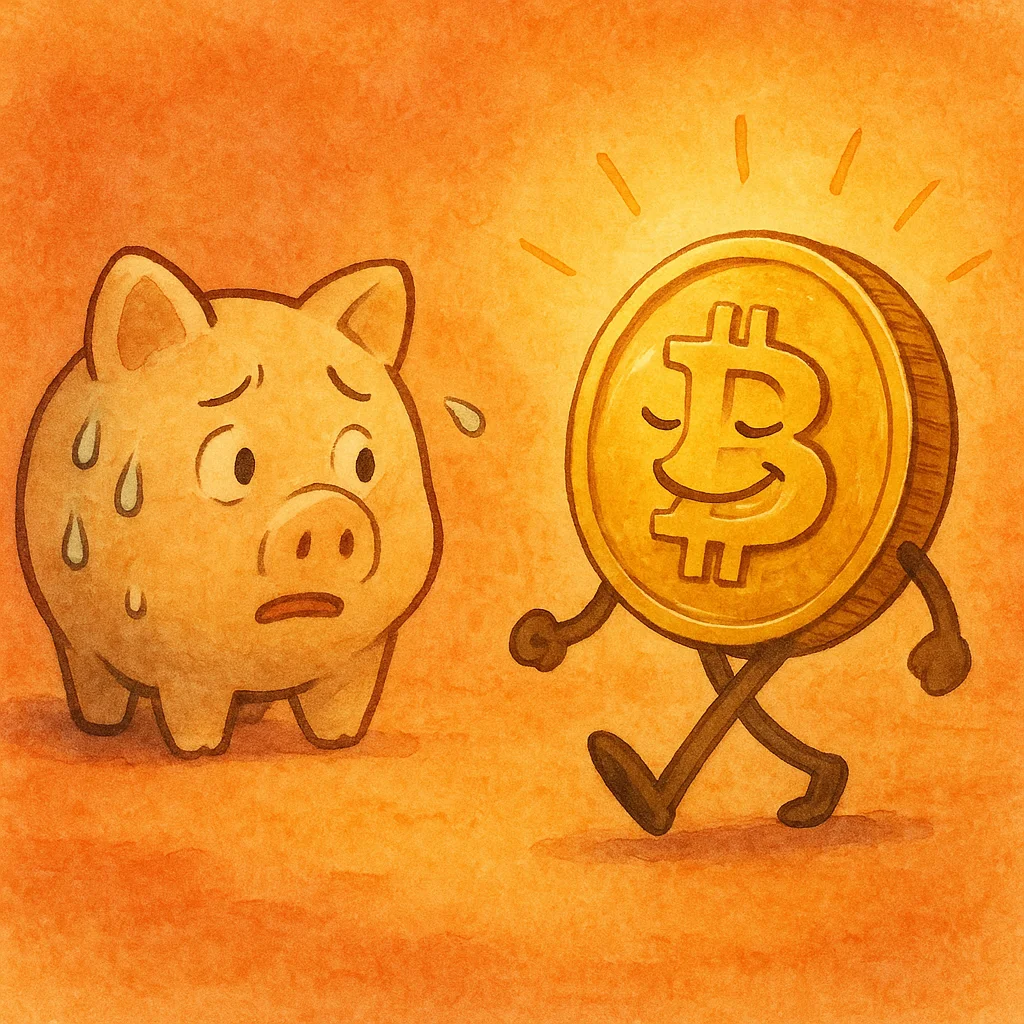
Bitcoin flips the script. Limited supply. No one can print more. Over time, it tends to go up - not because of speculation, but because of math.
Here’s the problem with digital Bitcoin: kids can’t touch it. It’s just numbers on a screen. No different from a video game score.
A paper wallet changes everything.
What a paper wallet gives kids:
My cousin keeps hers in a special box. She checks the price on my phone every time I visit. She’s 8, and she understands scarcity better than most adults.
Michael Saylor puts it perfectly:
If you want to do something satisfying in life, figure out how to give #Bitcoin to children & teach them to take personal custody of it. That will do more to change their lives and the world than anything else you could do.
— Michael Saylor⚡️ (@saylor) May 4, 2024
Parents worldwide are waking up. They’re giving their children an asset that appreciates instead of one that sits in a drawer.
How to present it:
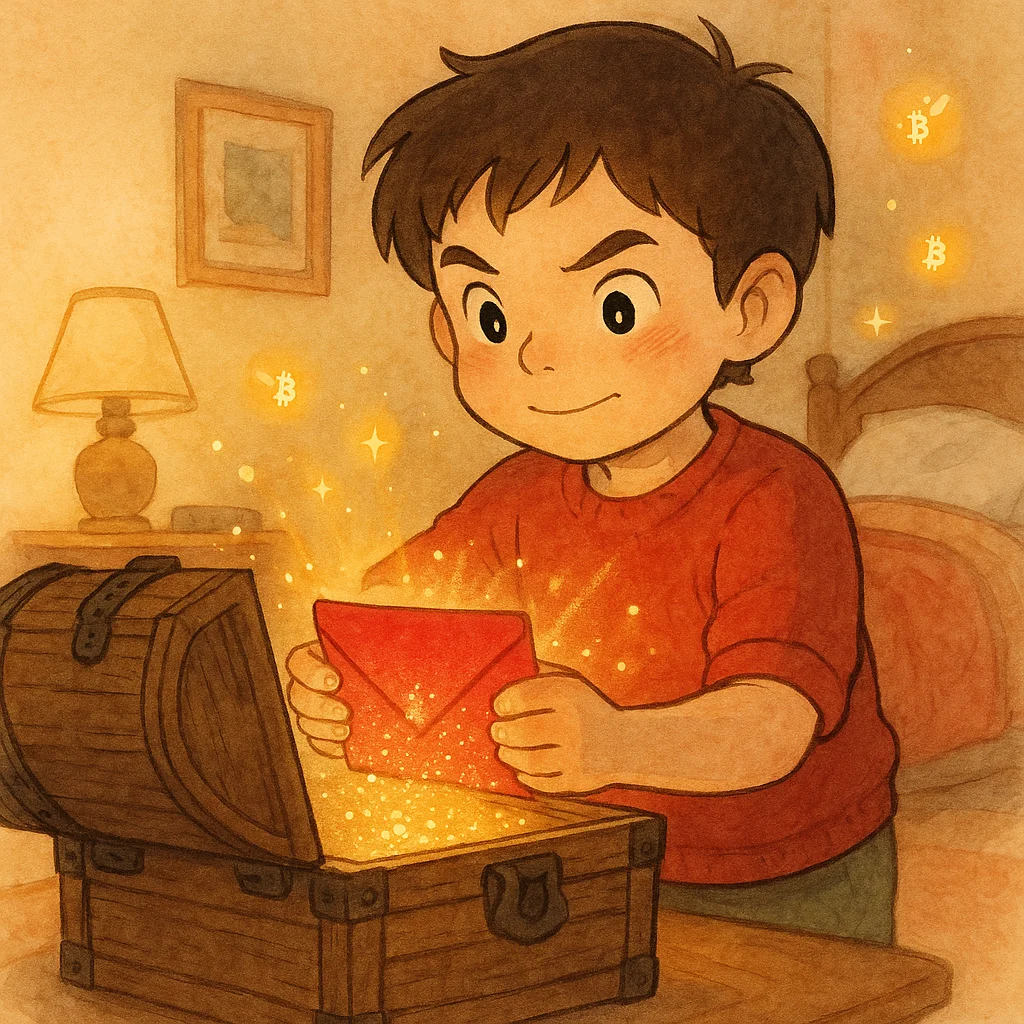
That last part is crucial. It teaches responsibility. Real stakes. No “Mom, can you get it back?” bailouts.
Don’t overthink this. The goal isn’t to make them rich. It’s to teach them.
| Age | Suggested Amount | Why |
|---|---|---|
| 5-7 | $5 | Concept introduction. “This is worth 5 dollars, but it might be worth more later!” |
| 8-10 | $10 | They can do basic math. Show them price changes. |
| 11-13 | $20-50 | Old enough to understand percentages and growth |
| 14+ | $50-100 | Can grasp investment concepts. Maybe set up their own wallet. |
Pro tip: Match their age in dollars. 8-year-old? $8 in Bitcoin. Easy to remember, and they love the personal touch.
The amount doesn’t matter as much as the lesson. $5 that doubles teaches the same thing as $500 that doubles.
Here’s where it gets fun.
After you give them the paper wallet, they’ll ask: “Can I spend it?”
Your answer: “You could. But watch what happens if you don’t.”
Set up a simple tracking ritual: - Check the price together once a month - Write it down in a notebook - Calculate how much their Bitcoin is worth now
Some months it goes down. “That’s okay. Look at the whole year.”
Some months it goes up. “See? Patience.”
This teaches delayed gratification better than any allowance system. They’re not saving because you told them to. They’re saving because they can see it working.
My cousin’s $5 is now worth $7. She tells everyone. She also refuses to spend it. The lesson landed.
Stephane Bounmy
Schools won’t teach your kids about sound money. Banks won’t either. It’s on us.
A paper wallet with a few dollars of Bitcoin isn’t just a gift. It’s a lesson in: - True ownership - Scarcity - Patience - Responsibility
You don’t need to explain the blockchain. You don’t need to debate monetary policy. You just need to hand them something that’s theirs and let them watch what happens.
Key takeaway: Stop explaining Bitcoin. Start gifting it.
Create a beautiful paper wallet they can hold, keep safe, and watch grow over time.
Create a Paper Wallet